


Your attendees live in a world of Netflix recommendations, Spotify playlists and Amazon suggestions that seem to read their minds. But even well-run events can fall into the trap of delivering a one-size-fits-all experience: the same badge, the same agenda and the same networking format for every person in the room.
Closing that gap is where the real opportunity lies. People don't just want a good event. They want their event: content that matches their interests, connections that are actually relevant and an experience that feels designed for them.
The good news? Personalisation is no longer the preserve of tech giants with seven-figure budgets. Event Tech Live 2025 made it clear that the tools are maturing fast, with event technology platforms increasingly building AI-powered personalisation into their core offering. But the most effective personalisation doesn't require AI at all. It requires intent.
This guide covers the full event lifecycle, from registration to post-event follow-up, with practical tactics at every budget level.
It starts before anyone arrives
One of the biggest personalisation opportunities is often overlooked: what happens before anyone walks through the door. The foundation is laid weeks earlier, and it starts with a form most organisers treat as pure admin: registration.
Your registration form is your first and best data collection opportunity. Every field is a chance to understand what each attendee actually wants. The trick is being strategic about what you ask. Conditional logic helps here: selecting "Marketing Director" as your role triggers leadership-track recommendations, while "Developer" surfaces technical sessions. Keep the form short and use progressive profiling (asking follow-up questions via email or app) rather than trying to capture everything upfront.
That data then powers everything else. Personalised pre-event emails that segment by role, industry or experience level consistently outperform generic mailouts. Send first-timers an orientation guide. Send returning attendees a "what's new this year" summary. Send everyone a personalised agenda recommendation based on their stated interests.
Salesforce took this further at Dreamforce, as shared at ETL 2025. AI generates tailored "Convince Your Boss" letters for attendees, helping them justify attendance using language relevant to their specific role and goals. It's a small gesture that removes a real barrier.
The impact of getting pre-event personalisation right can be dramatic. Sarah Kill from Carers UK shared at ETL that personalised pre-event communications and agenda recommendations cut their dropout rate from 30% to under 10%. That's not a marginal improvement. It's a transformation.
Make every attendee feel seen
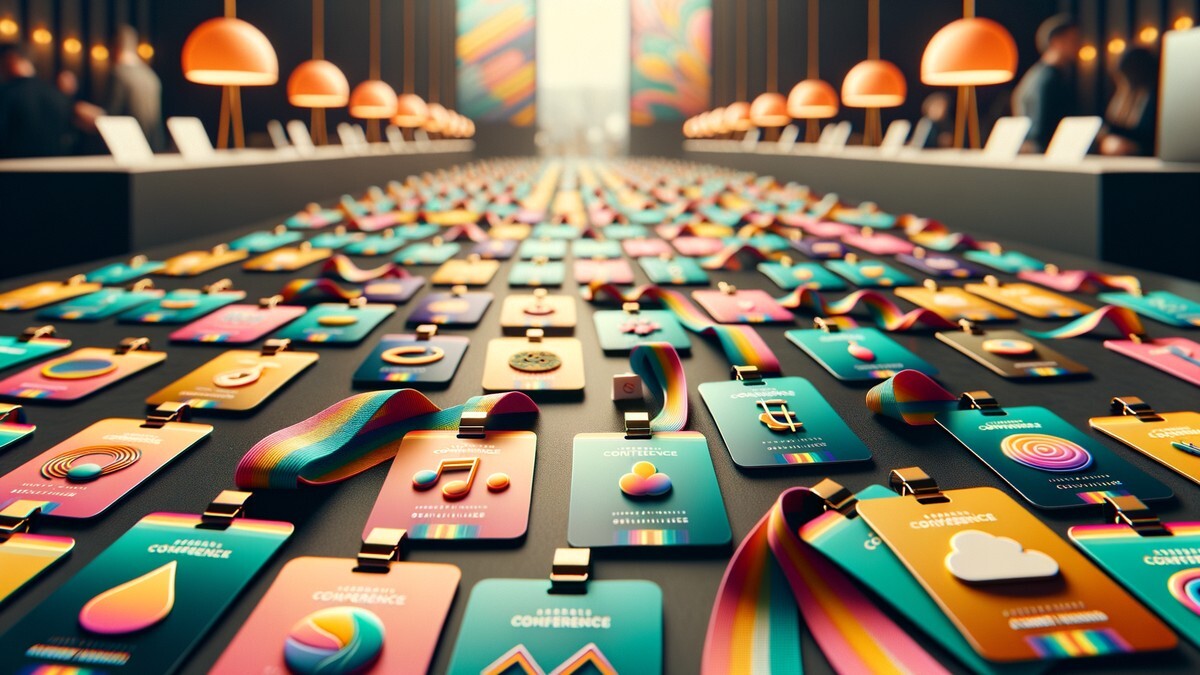
The moment someone picks up their badge is the moment personalisation becomes tangible. And most events waste it entirely.
Evelina Dantley, Employee and Talent Attraction Lead at Wise, shared a simple idea at Event Tech Live 2025 that gets it right. During registration, attendees are asked about their favourite song, sweet or hobby. The answer is printed on their badge. It gives strangers something personal and human to talk about from the very first interaction, without having to start with "So, what do you do?"
You can layer more practical signals onto badges too. Colour-coded lanyards that distinguish speakers, VIPs, first-timers and sponsors help staff respond appropriately at a glance. Hannah Van Nostren at CTO Craft uses green, yellow and red stickers so attendees can signal how open they are to networking. It costs almost nothing and immediately sets the right tone.
For higher-tech environments, smart badge technology is advancing quickly. Eventbase's Magic Badge, presented at ETL 2025, uses NFC and QR codes to trigger personalised content on attendees' phones, enable express check-in and support gamified activations. At Dreamforce, Salesforce combines wearable NFC technology with AI to power express check-in, personalised session recommendations and real-time wayfinding based on each attendee's profile and schedule.
But the bigger win for most events is personalised content. AI-powered agenda assistants are moving from novelty to expectation. HubSpot's INBOUND launched an AI Agenda Assistant that asks attendees a series of short questions about their schedule, interests and professional goals, then generates a curated multi-day agenda within seconds.
The data backs this up. At Salesforce events, AI-driven session recommendations based on demographic and behavioural data resulted in a 30% increase in session attendance, as reported at ETL 2025, and measurably higher satisfaction. When you surface the right content for the right person, they engage more deeply and stay longer.
Ana Williams, Founder of The Hook Studio, made an important point at ETL about balance. While personalised guidance is valuable, attendees should also have the option to diverge from the suggested path and discover new interests organically. The best personalisation systems offer recommendations, not prescriptions. Think GPS, not rails.
Connections that actually matter
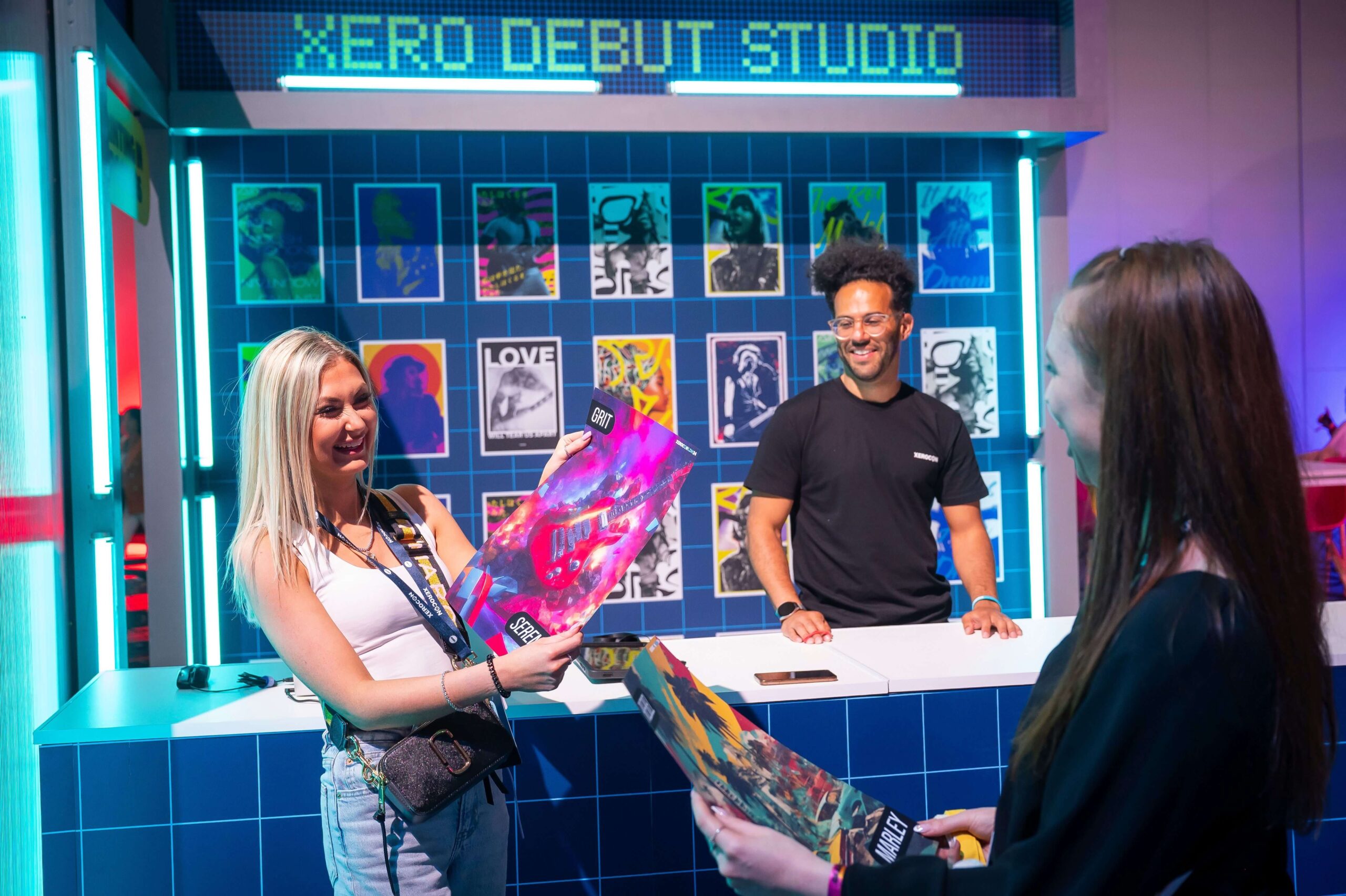
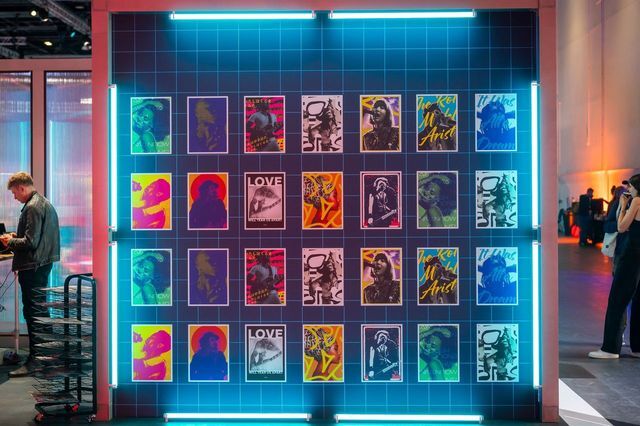
Xerocon’s AI Music Factory by INVNT: every attendee created a personalised AI-generated album cover and took home a unique vinyl record. View the full case study.
Networking drinks are a good start, but putting 500 people in a room and leaving the rest to chance leaves a lot of value on the table. Even at events where younger professionals are showing up in growing numbers (and they are — Gen Z actively prefer in-person events over virtual alternatives), unstructured networking remains one of the biggest pain points attendees report.
AI-powered matchmaking is changing this rapidly. Grip's deployment at HumanX facilitated over 19,000 connections across the event, using AI that analyses profiles, interests, goals and real-time behaviour to suggest relevant matches. Clarion Events saw a 44% increase in in-person meetings after deploying Grip across their exhibition portfolio.
What makes the HumanX model particularly instructive is the variety of networking formats. They ran three distinct programmes: open-access 15-minute meetings anyone could request, curated VC-founder meetings where only investors could initiate contact, and buyer-vendor matching based on metadata. Each format served a different purpose, and attendees only needed to set up their profile and preferences once.
Christine Renaud, co-founder of Braindate, reinforced at ETL that people come to events for connections, not content. Topic-matched networking, where attendees are grouped by shared interests or challenges rather than job titles, consistently outperforms random mixing. Platforms like Braindate and Swapcard use enriched profiles that go beyond role and company to match on goals, interests and in-event behaviour.
"They don't want more sterile talks under neon light with a glass of wine trying to find a meaningful stranger. They want more thoughtful, meaningful connection that will propel them, their business, their community forward." - Christine Renaud - Co-founder and CEO of Braindate
You don't need a platform to apply the same principle. Curated dinner tables where organisers assign seating by industry or interest area, interest-based breakout groups with conversation prompts, and physical "looking for / offering" boards all achieve the same goal: giving people a reason to connect beyond small talk.
Hire Space Top Tip:
The simplest personalisation win for networking? Use registration data to create themed groups: "Sustainability Champions," "First-Time Organisers" or "Event Tech Curious." Give each group a designated meeting point and a conversation-starter prompt at the start of the day. It takes 30 minutes to set up and transforms the networking experience.
Don't stop when the lights go down
This is where even great events leave the most value on the table. As Sarah Cox, Managing Director at Jonas Event Technology, highlighted at ETL 2025: 79% of leads gathered at events never receive a follow-up. Not a late follow-up. No follow-up at all. That's not just a missed opportunity. It's a waste of everything you invested in getting those people through the door.
The fix starts with recognising that post-event communication should be as personalised as everything that came before it. Send recaps based on sessions each person actually attended, not a generic highlights reel of the full programme. Attendees who receive follow-up content tailored to the sessions they actually attended engage at significantly higher rates than those who get a generic recap, and the data to do this is already sitting in your event platform.
AI is making this easier at scale. Tools like HeyGen can generate personalised video messages for thousands of attendees. AI-driven email campaigns can recommend relevant sessions, resources or next steps based on each person's in-event behaviour. Platforms with human-in-the-loop AI models are cutting the time needed to produce personalised follow-up content dramatically, letting teams scale post-event communication without sacrificing quality.
There's a neuroscience angle here too. As we explored in The Event Experience Playbook, the brain's consolidating state is where memories are either strengthened or lost. Personalised recaps sent at strategic intervals act as retrieval triggers that keep the event alive in memory. A "What stuck with you?" prompt a week later, a curated highlight reel a fortnight after that and a personalised invitation to next year's event all reinforce the connection.
For a deeper look at designing effective feedback loops, our guide on collecting and using event feedback covers the fundamentals.
The trust equation: personalisation without the creep factor
More data enables better personalisation. But attendees increasingly expect to understand and control how their information is used. Get this wrong and personalisation feels invasive rather than helpful.
For UK and EU events, GDPR sets the baseline. Consent must be explicit, specific and separate from general terms. No pre-checked boxes. Separate opt-ins for different data uses (marketing, sponsor sharing, personalisation). Only collect data you'll actually use. If your personalisation engine doesn't need job titles, don't ask for them.
The practical middle ground is progressive data collection. Start with essentials at registration, then ask for preferences through in-app prompts during the event. Always explain the value exchange: "Tell us your interests and we'll build you a personalised schedule" is more effective and more compliant than silently profiling behaviour.
Transparency is your strongest tool. Be explicit about what the AI is doing: "We're recommending this session because you attended two similar talks yesterday" builds trust. Implement preference centres where attendees control their communication frequency, topics and channels. This isn't just good data practice. It's good experience design.
Start small, start now
You don't need a £50,000 platform to personalise your next event. The consensus from ETL was clear: pilot one personalisation feature per event and scale from there.
Here's a starting checklist, ordered by effort:
Requires no technology:
- Brief your registration and floor staff on key attendees and their goals
- Add a personal question to your badge (favourite song, hobby, best advice received)
- Create colour-coded lanyards for different attendee types
- Assign dinner or roundtable seating by interest area rather than randomly
- Include a handwritten welcome note for VIPs or speakers
- Set up a physical "looking for / offering" board
Requires an event app or platform:
- Build conditional registration forms that adapt by role or seniority
- Send segmented pre-event emails based on attendee type
- Print personalised agenda cards from registration data
- Create interest-based networking groups with designated meeting points
Requires AI or specialist tools:
- Deploy AI-powered agenda recommendations
- Use matchmaking platforms for structured networking
- Generate personalised post-event recaps and follow-ups
- Track in-event behaviour for real-time content suggestions
The thread connecting all of these is the same: treating attendees as individuals rather than a crowd. Whether you're printing a favourite song on a badge or deploying a full AI matchmaking platform, the message you're sending is identical: we thought about you specifically.
As Alistair Turner explored in his piece on the shift from experientialism to transformationalism, attendees no longer want a great generic experience. They want to be personally changed by it. Personalisation is how you make that possible.
For more on designing events around genuine human connection — not just content delivery — see <a href="https://hirespace.com/blog/the-human-advantage">The Human Advantage</a>.
Ready to find the perfect venue for your next event?
The right space is the starting point for a personalised attendee experience. Find venues that match your event, your audience and your goals.
Start your venue search