


You've nailed the venue. The AV is flawless. The agenda is tight, the speakers are confirmed and the catering brief is locked in. So why, three weeks later, do attendees struggle to pinpoint a single standout moment?
It's a familiar problem. You can execute every logistical detail perfectly and still produce an event that fades from memory before the taxi home. That's because the things people remember aren't the things on your project plan. They don't remember the smooth Wi-Fi or the well-timed coffee break. They remember how the event made them feel.
The events industry is waking up to this. As Alistair Turner argued in his piece on the shift from experientialism to transformationalism, attendees no longer want a great experience. They want to be changed by it. But how do you actually design for that?
This playbook gives you a practical framework for building events around emotion, memory and meaning. It draws on behavioural science, insights from Event Tech Live 2025 and real-world examples from event professionals who are putting these ideas into practice.
For a companion piece on why authentic connection is your event's greatest competitive advantage in an AI-saturated world, see <a href="https://hirespace.com/blog/the-human-advantage">The Human Advantage</a>.
"Only emotionally tagged experiences become memories. So if there's no emotion, either positive or negative, the brain doesn't actually bother encoding it." - Lisa Schulteis - ElectraLime Marketing
Your brain on events
Let's start with a question most event planners never ask: how does the brain actually process an event?
Daniel Kahneman's research, outlined in Thinking, Fast and Slow, gives us one of the most useful answers. His peak-end rule shows that people judge experiences based on two snapshots: the most emotionally intense moment and the ending. Not the average. Not the duration. Just those two points. Your attendees' future decisions (will they come back? will they recommend you?) are shaped by their remembering self, which works like a camera taking photos at emotional high points, not a video recording every minute.
Lisa Schulteis, founder of ElectraLime Marketing, expanded on this at Event Tech Live 2025 with a framework built around three distinct brain states:
Scanning is the state attendees are in when they first arrive. Their brains are doing pattern detection and predictive processing, trying to orient themselves. Information overload at this stage doesn't grab attention. It triggers avoidance. Your job here is to reduce cognitive load: clear signage, personalised agendas, visual previews that help people navigate without thinking too hard.
Encoding is where memories are actually formed. The critical insight? Only experiences tagged with emotion get encoded into long-term memory. If a moment doesn't make someone feel something (surprise, pride, curiosity, connection), it won't stick. Multi-sensory experiences that combine sight, sound and touch are particularly effective at creating durable memories.
Consolidating happens after the event, when attendees reflect on what they experienced. This stage is crucial for memory retention and almost always overlooked. Personalised recaps, follow-up prompts and retrieval triggers at strategic intervals can strengthen event memories long after people have left the venue.
Chip and Dan Heath's research in The Power of Moments breaks this down further into four building blocks of memorable experiences: Elevation (boosting sensory appeal or raising the stakes), Insight (creating sudden realisations), Pride (recognising achievement) and Connection (deepening relationships through shared meaning).
The practical takeaway is clear: stop trying to make everything uniformly good. A single extraordinary moment outweighs two hours of "fine". Engineer specific peaks instead.
"The brain doesn't remember everything. It remembers what you design it to remember." - Lisa Schulteis - ElectraLime Marketing
Map the emotional journey, not just the schedule
Event plans naturally centre on logistics: what happens, where and when. The next step is layering in how people should feel at each stage.
Evelina Dantley, Employee and Talent Attraction Lead at Wise (and formerly Global Events Strategy Manager at Meta), frames events as storytelling in three acts: arrival (wayfinding, lighting, music, accessibility), anticipation (leaders meeting the community before they take the stage) and reveal (the human moment at the heart of the programme). Every element serves the narrative arc.
A useful planning framework is the 5 Es: Engage (pre-event), Enter (arrival), Experience (core programme), Exit (close) and Extend (post-event). For each phase, the question isn't "what happens?" but "how should people feel?"
Before they arrive
The experience starts before anyone walks through the door. Personalised comms, sensory teasers and visual previews build anticipation while priming the scanning brain. Give people just enough information to feel oriented without overwhelming them. A personalised agenda sent the week before does more for the attendee experience than any amount of on-the-day signage.
The first five minutes
Registration isn't admin. It's your opening act. As Dantley puts it, the check-in desk is the first moment of excitement.
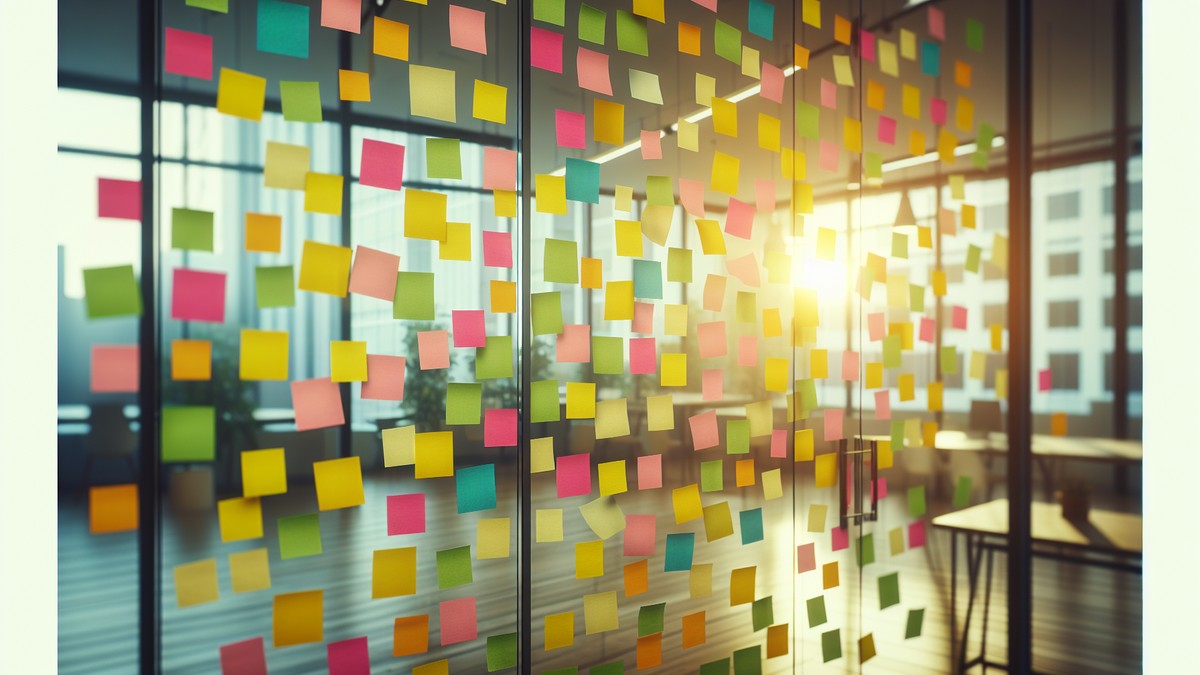
Some of the most effective ideas from Event Tech Live 2025 were also the simplest. At CTO Craft events, Hannah Van Nostren creates a large photo wall at registration where attendees stick post-it notes sharing "the best piece of advice you ever received from a mentor." It sparks conversation from the very first minute. She also uses a green, yellow and red sticker system on badges so attendees can signal how open they are to networking. It's low-tech, low-cost and immediately puts people at ease.
Dantley takes a different approach. During registration, attendees are asked about their favourite song, sweet or hobby, and the answer is printed on their badge. It gives strangers something personal to talk about without having to start with "So, what do you do?"
Transitions
The gaps between sessions are where energy dies or builds. Design them deliberately. A curated soundtrack during a break does more than silence. A surprise espresso cart at 2.30pm rescues the post-lunch slump. A shared reflection prompt on screens between sessions ('What's one thing you'll change after that talk?') gives people a reason to start conversations with substance rather than small talk.
The close
It’s easy for events to lose momentum at the close. Energy dips, people start to drift and the final session plays to a thinning room. But the peak-end rule tells us those last 10 minutes shape how the entire event is remembered. Design a deliberate emotional high: a moment of shared celebration, a collective action, a closing story that ties the day together and sends people out with energy.
Practical tool: sketch an "energy curve" alongside your agenda. Plot where the emotional peaks and dips are likely to fall. Do the peaks coincide with your most important content? Are the natural energy dips (post-lunch, late afternoon) addressed with surprise moments or format changes?
"Space emotional peaks about every 10 to 12 minutes. Integrate sponsors and logistics into the story rather than treating them as separate transitions. The audience needs a story arc, they don't want a commercial break." - Todd Moritz - Bishop-McCann
Design for the senses, not just the screen
Corporate events tend to lean heavily on visual elements: slides, screens, signage. That's one sense out of five, which means there's a huge untapped opportunity in the other four.
Sound is one of the most underused tools in event design. A curated ambient soundtrack shifts the mood of a networking space in seconds. Silence before a keynote builds anticipation. An upbeat track during a transition re-energises the room. Sound designer or not, a thoughtfully assembled playlist costs nothing and changes everything.
Scent has the strongest link to memory of any sense. The smell of fresh coffee as people arrive. Greenery and natural materials in breakout spaces. Even a well-placed diffuser in a workshop room creates a sensory anchor.
Touch and texture shape how people feel in a space without them noticing. Soft furnishings and lower lighting signal intimate conversation. Standing tables and harder surfaces signal energy and movement. Interactive installations that invite people to physically engage (build something, write something, move through something) activate the encoding state far more powerfully than watching a screen.
"Brains don't process senses separately. They process senses together. So if you see and hear and touch something simultaneously, your brain's going to integrate all three of those inputs into a stronger single memory." - Lisa Schulteis - ElectraLime Marketing
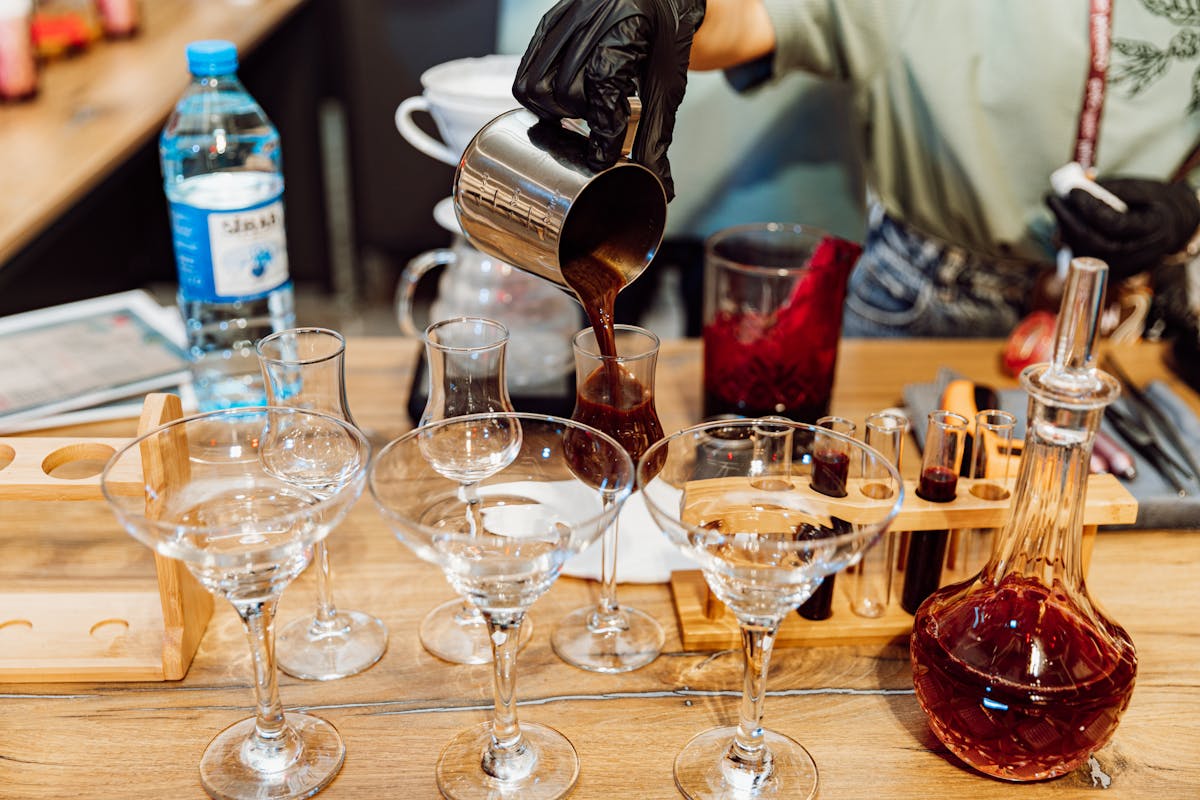
Taste is one of the most powerful experience design tools disguised as logistics. At Event Tech Live 2025, Lydia Richie from Deal described a smoothie station where drink names were tied to the company's product offerings. Ordering a "compliance cooler" or a "data detox" naturally sparked conversations about the full product range. It turned catering into a brand activation. You can apply the same thinking to any F&B moment: surprise desserts, themed cocktails, interactive food stations that give people a reason to linger and talk.
The balance principle matters. The goal is immersion, not overwhelm. Consider neurodivergent attendees and those with sensory sensitivities. Quiet zones, low-stimulation breakout spaces and clear information about sensory elements in advance are essential, not optional extras.
As Schulteis's research confirms, multi-sensory experiences create the most durable memories because they activate multiple encoding pathways simultaneously. If you want people to remember your event, give their brains more than one way to store it.
Break the script with surprise and delight
Predictability is the enemy of memorability. When attendees can guess what happens next, their brains switch to autopilot. The Heath brothers call this "breaking the script": violating expectations in a positive way to create an emotional spike that becomes a memory landmark.
Timing is everything. Deploy surprises during natural energy dips (after lunch, during long transition breaks, mid-afternoon) and they serve double duty. They rescue attention and create the peaks your attendees will remember.
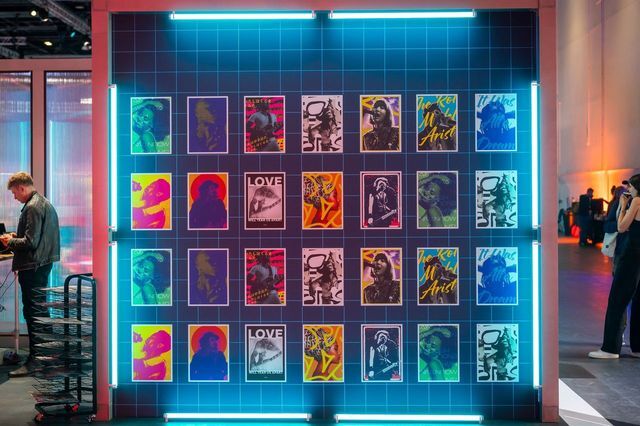
Some of the best examples from Event Tech Live 2025 were built on co-creation rather than spectacle. At ZeroCon, event agency INVNT built an "AI Music Factory" where attendees created personalised music tracks and album covers using generative AI tools. Each person left with a unique clip tied to their own creative choices. The experience turned passive attendees into active storytellers and became one of the most talked-about moments of the event.
At COP28, Ochre Brand designed an interactive Ghaf tree installation where delegates made sustainability pledges that generated bespoke digital artwork. The tech was sophisticated, but the emotional hook was simple: people felt they were contributing something that mattered.
Not every surprise needs technology. Van Nostren uses Lego-based sponsor raffles where the act of building becomes the networking moment. Richie described hosting a "sauna party" at a Nordic event because leaning into regional quirks is the fastest way to stand out in what she called a "sea of sameness."
The test for any surprise is authenticity. Does it feel generous or gimmicky? Does it align with the event's purpose? As Peter Clarke from INVNT put it at ETL: "Ask what the human emotion is that we're trying to create. Is it curiosity, pride, empathy? If you start with the tech, you'll only get noise. If you start with the emotion, you'll get meaning."
Hire Space Top Tip:
You don't need a big budget for surprise and delight. A handwritten welcome note at each seat, an unannounced acoustic set during a break or a "secret menu" cocktail for anyone who asks the bar for "the good stuff" can create the kind of unexpected moments people talk about for months. Start with one surprise per event and build from there.
Give people agency: from audience to participant
The fastest-growing trend in corporate events is the shift from passive consumption to active participation. And it's not just a format preference. It's directly linked to how much people enjoy themselves.
Christine Renaud, co-founder of Braindate, made the case bluntly at Event Tech Live 2025: participative events consistently yield higher satisfaction scores. Why? Because attendees feel they're driving their own experience rather than having one delivered to them.
The deeper insight is that people primarily come to events for connections, not content. Cramming the agenda with back-to-back sessions might feel like value, but it's actually the opposite. It leaves no space for the conversations, relationships and serendipitous encounters that attendees value most.
Formats that shift this balance include peer roundtables, AMA sessions, "bring your challenge" clinics where experts work on real problems in real time, World Cafe discussions and topic-matched networking platforms like Braindate. The common thread is giving attendees a say in what happens, rather than asking them to sit and absorb.
Renaud also stressed the importance of belonging and psychological safety. Large events can be intimidating and isolating. The fix isn't to make the whole event smaller. It's to create micro-environments within the larger event where people can develop a sense of connection. Smaller breakout rooms, facilitated small-group discussions, curated dinner tables and clear signals that it's OK to approach strangers all contribute.
This extends to your staff. Vanessa Lovatt, founder of Event Tech World, emphasised that training your team to welcome people warmly and proactively connect attendees to each other has a measurable impact on how the event feels. The tone your team sets in the first 30 seconds of an interaction ripples through the entire experience.
Measure what matters: did they actually love it?
If you're still measuring event success through post-event surveys with response rates that typically hover around 10–15%, you're making decisions based on a fraction of the story. The industry is moving toward Return on Experience (ROE): measuring emotional engagement alongside operational and commercial metrics.
The most striking example is the JOY Index, developed by Todd Moritz at Bishop-McCann and presented at Event Tech Live 2025. It defines joy as trust multiplied by purpose and measures it using facial analytics (via Zenis AI) and wearable devices (via Dr Paul Zak's Immersion platform) that detect subtle physiological changes linked to oxytocin and dopamine release. The result is a numeric engagement score that maps peaks and drops in real time, pinpointing exactly which moments sparked emotional connection and which fell flat. It's a long way from "How would you rate this event out of 10?"
You don't need that level of investment to start measuring better. The shift is conceptual as much as technological.
"Moments of joy don't just happen. They're engineered through shared experience and trust and emotional pacing." - Todd Moritz - Bishop-McCann
Read behaviour, not just responses. Robin Booth from EMAP put it simply: "You'll be able to track behaviour instead of feedback, and behaviour will tell you how successful they found the event." Session dwell time, app interactions, social media mentions, whether people stay to the end, which spaces they gravitate toward. These signals tell you what surveys can't.
Ask better questions. Stop asking "How would you rate this event?" and start asking "What moment will you tell a colleague about?" and "How did this event make you feel?" A simple event NPS (would you recommend this event to a colleague?) gives you a comparable, trackable metric that cuts through noise.
Design for the consolidating state. Schulteis's third brain state (consolidating) happens after the event, and it's where memories are either strengthened or lost. Personalised recaps sent at strategic intervals, short "What stuck with you?" prompts a week later and curated highlight reels all act as retrieval triggers that keep the event alive in memory.
For a deeper dive into practical feedback methods, our guide on collecting and using event feedback covers the fundamentals. And if you're rethinking how you connect event engagement to business outcomes, why companies are getting event ROI wrong is worth reading alongside this piece.
"Surveys have been the default measurement forever. But they're flawed. They're built on memory. And memory fades fast after an event. You usually hear from the happiest 10% and the most frustrated 10%. So that leaves the middle 80% with no data whatsoever." - Todd Moritz - Bishop-McCann
The playbook in one line
The events people love aren't the ones with the biggest budgets or the slickest production. They're the ones that made them feel something.
Understand how memory works. Map the emotional journey. Engage all the senses. Break the script. Give people agency. And measure what actually matters.
Before your next event, ask yourself one question: what's the moment people will talk about on the way home?
If you don't have an answer, you've got work to do. And now you've got a playbook to do it with.
"People remember how a session made them feel, not just what was said on stage." - Todd Moritz - Bishop-McCann
Ready to find the perfect venue for your next event?
Whether you're planning a conference, away day or team event, the right space sets the tone for the entire experience.
Start your venue search